Oct 29, 2026Turf Guides
3G Infill vs 4G Non-Fill Football Turf: What Changes on the Pitch
Infill turf still dominates full-size pitches, but non-fill systems remove a maintenance line item. The real difference in pile, density and upkeep.
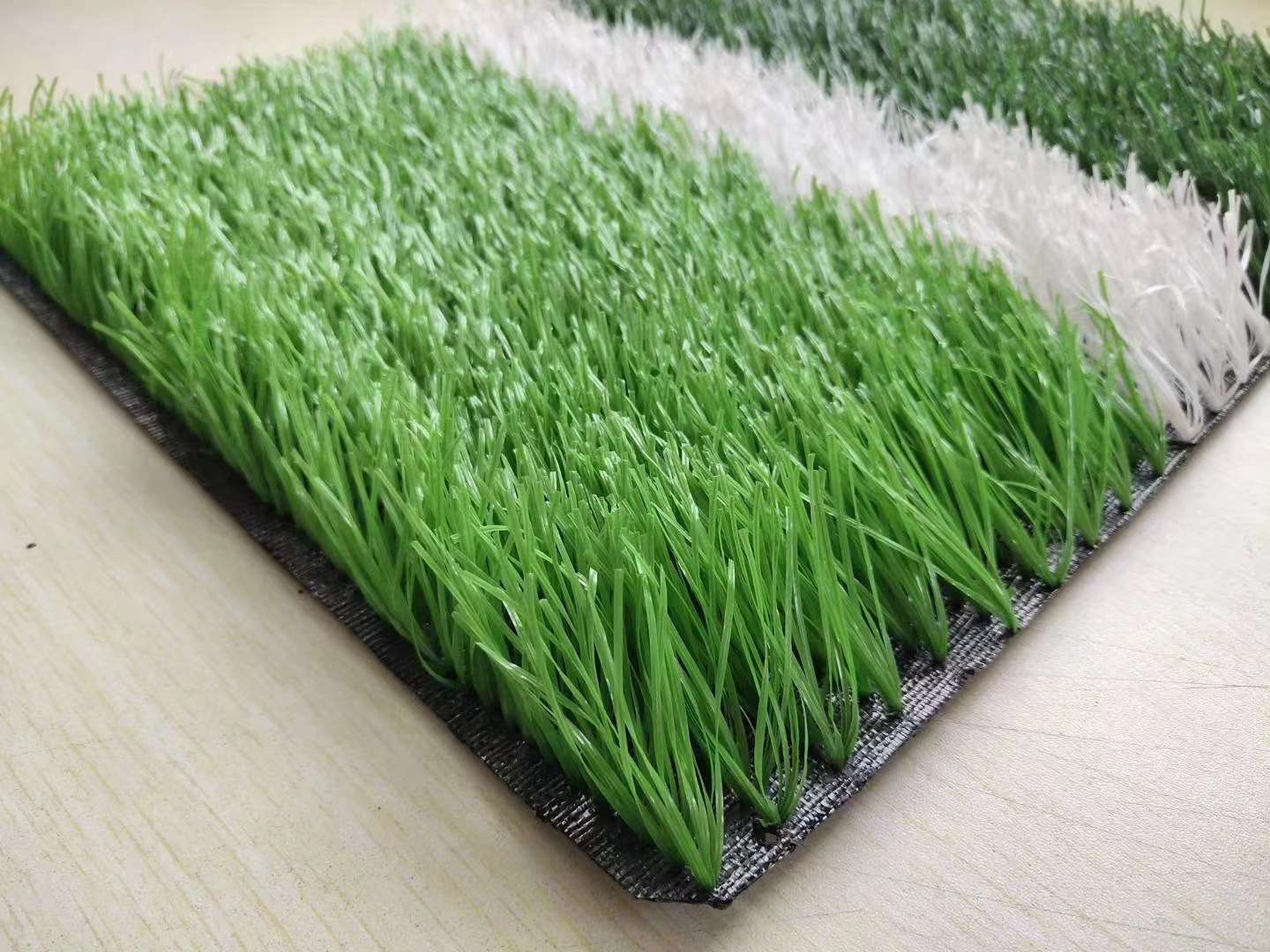
The 3G and 4G labels get used loosely. In practice they describe two different ways of keeping a football surface playable: one uses infill to support the fibre, the other shapes the fibre so it stands without it.
3G infill: depth does the work
An infill pitch carries 40 to 60 mm of fibre, a 5/8 to 1/2 inch gauge and 140 to 170 stitches per metre, which gives roughly 8,820 to 10,710 stitches per square metre. Sand and rubber granules are brushed in to about two thirds of the pile height. The infill holds the fibre upright, adds rotational resistance for studs and lets the surface be tuned: more rubber for shock absorption, more sand for firmness.
The cost is maintenance. Infill migrates, compacts and needs topping up, and it has to be redistributed after heavy rain. On a pitch used every day, that is a standing labour line.
4G non-fill: the yarn does the work
A non-fill surface uses a shaped yarn. Our 4G series uses an X profile at 14,000 or 16,000 Dtex, tufted at 25 to 35 mm with a 3/8 inch gauge and 160 to 250 stitches per metre, so density lands between 16,800 and 26,250 stitches per square metre. There is no infill to top up, no granules in the changing room and no redistribution after rain.
The trade-off is that the yarn has to carry the load alone. That makes Dtex and stitch rate more important than on an infill pitch: a light non-fill surface at low density will flatten in the busiest zones within a season, which is why we build the series at 14,000 and 16,000 Dtex rather than a single weight.
Which one fits your project
For a stadium or a club pitch with ground staff and a maintenance contract, infill gives the most tunable surface. For school fields, community pitches, futsal courts and multi-use games areas where nobody is available to top up infill, non-fill removes the recurring cost entirely. Both use PP+Net primary backing with 5BR latex coating in our range, so the difference is in the pile and the upkeep, not in the backing.